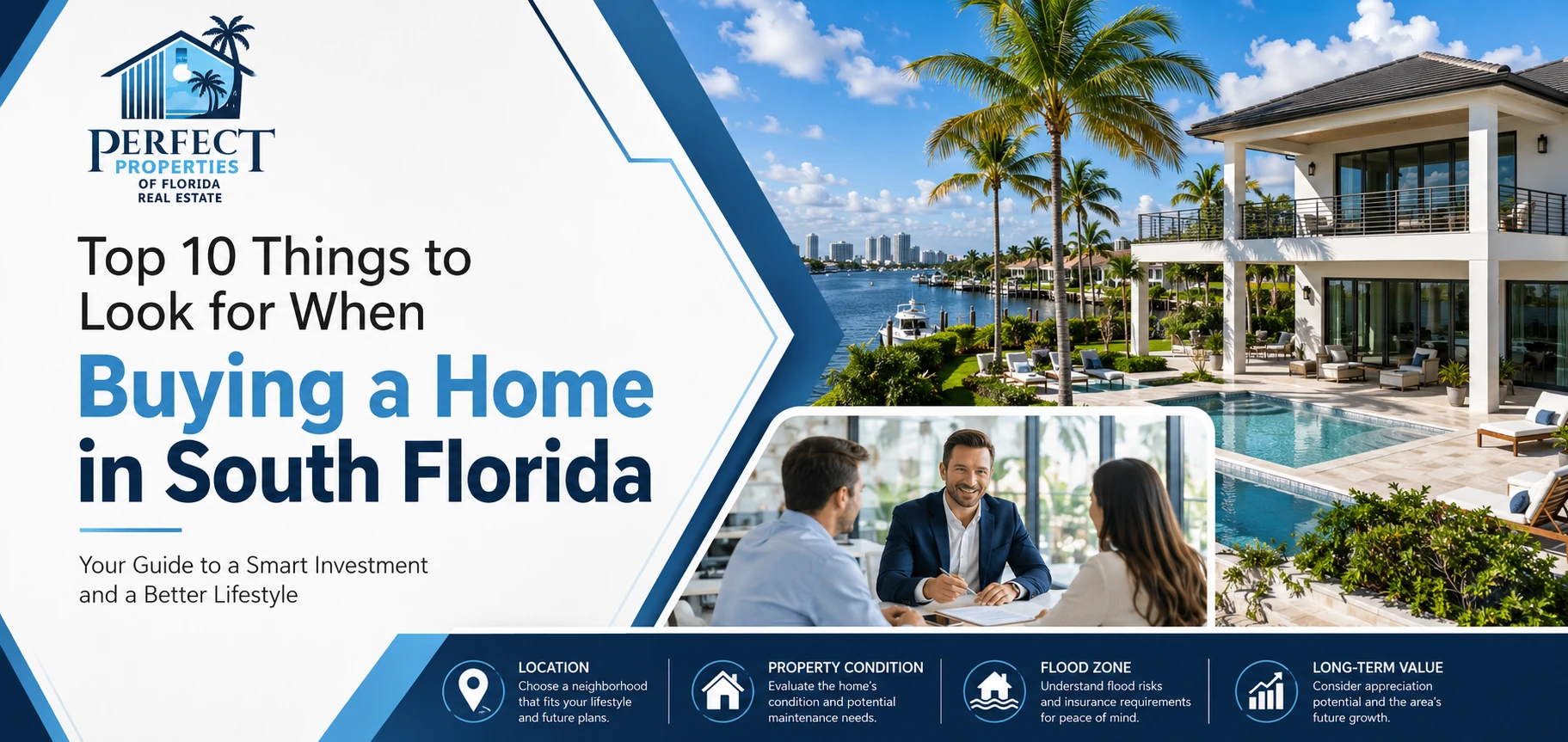
A South Florida home can look perfect in the listing photos and still hide an aging roof, a high-risk flood zone, a steep insurance quote, or a condo association with thin reserves. Buying residential property in South Florida means looking past the staging and weighing hurricane exposure, flood risk, insurance, ownership costs, and neighborhood fit alongside price.
This residential property checklist covers 10 things to evaluate before you make an offer, using Fort Lauderdale and Tamarac as examples, since a canal-side home and an inland community raise different questions. Throughout, we separate what you can judge on a tour from what needs a professional inspection, official records, or expert advice. Treat these home-buying tips Florida buyers can use as education, not legal, insurance or financial advice.
Choose the Right Location and Neighborhood
Location shapes your daily routine and your long-term options, so compare it early. Visit more than once, at different times of day. A quiet street at 11 a.m. can feel very different at rush hour or on a weekend night.
Neighborhoods in Fort Lauderdale and Tamarac can suit different buyers. A canal-side Fort Lauderdale street may appeal if you want boating access, while an inland Tamarac community may fit buyers who prefer a different layout, property type, or commute. Neither is automatically better. It depends on your priorities.
Evaluate Neighborhood Safety and Surroundings
Look at what you can observe and verify:
- Upkeep of nearby homes and streets
- Street lighting and road access
- Noise from traffic or nearby businesses
- Surrounding development or construction
- Crime information published by local agencies
Rely on public data and your own observations, not neighborhood rumors.
Check Accessibility and Everyday Convenience
Map the trips you make every week:
- Distance to work
- Grocery stores and healthcare
- Schools and recreation
- Major roads and transportation
- Your real commute at peak hours
Ask whether the location will still work in five years, not only today.
Compare Property Prices and Market Value
An asking price is the seller’s opinion, not proof of value. As you browse South Florida homes for sale, compare each listing with what similar homes have actually sold for.
Review Comparable Property Sales
Focus on recent sales that match your target property:
- Recently sold homes nearby
- Similar square footage
- Comparable age and condition
- Similar lot size
- Waterfront versus inland differences
Identify Potential Overpricing
Red flags include an asking price well above recent sales, cosmetic renovations that mask deferred maintenance, and a premium the location does not explain. Two homes with similar square footage can be worth different amounts if one has a renovated interior, a newer roof, or waterfront access. A buyer’s agent can pull comparable sales, and professional residential property buying assistance can help you decide whether an offer makes sense.
Looking for the Right Home in Fort Lauderdale?
Comparing residential properties can be challenging when prices, locations, and property conditions vary. Perfect Properties of Florida can help you explore available residential options and evaluate properties that match your requirements.
Explore Residential Properties
Inspect the Roof, Structure, and Overall Property Condition
[Image 2: south-florida-residential-property-inspection.jpg. Alt text: Home inspector checking the exterior condition of a residential property in South Florida.]
South Florida’s heat, humidity, rain, and storms are hard on homes. A tour helps you spot warning signs, but it does not replace a professional inspection. Do not let a renovated kitchen distract you from an aging roof or persistent moisture.
Examine Roof Age and Condition
- Roof age and material
- Visible deterioration or patched areas
- Ceiling stains that suggest past leaks
- Permits and replacement records
- Hurricane-protection features
Roof age affects both repair costs and insurance, so ask for records early.
Look for Structural and Moisture Problems
- Cracks in the foundation or walls
- Water stains on ceilings and walls
- Musty odors or bubbling paint
- Window and door condition
- Exterior drainage and grading
- Signs of termites or wood damage
Treat these as reasons to call a professional, not as diagnoses.
Evaluate Major Home Systems
Ask about the age and service history of the air conditioning, plumbing, electrical system, water heater, and ventilation, and confirm which appliances stay with the home. In South Florida, the A/C works nearly year-round, so its condition deserves extra attention.
Check Flood Zones, Drainage and Environmental Risks
Flood exposure varies by property, so research the specific address instead of assuming an entire area is high or low risk.
Review FEMA Flood Zone Information
Enter the address in the FEMA Flood Map Service Center to see its flood zone designation, generally classified as high-risk or moderate-to-low-risk. A lower-risk designation does not mean a property can never flood, and mortgage lenders generally require flood insurance in high-risk zones. If an elevation certificate exists, ask for a copy.
Examine Drainage and Previous Water Damage
- Yard grading and standing water
- Drainage systems
- Water stains inside and outside
- Signs of previous flood damage
- Seller flood disclosures and available records
Ask whether the property has ever taken on water.
Understand Waterfront Property Considerations
A canal-front home in Fort Lauderdale raises questions an inland Tamarac property may not: seawall condition, dock condition, erosion, permits, and maintenance responsibilities. Request permit records and have waterfront structures evaluated by a qualified professional before you commit. If waterfront living is your goal, explore Fort Lauderdale waterfront properties with a buyer’s agent who knows the area.
Understand Homeowners Insurance and Hurricane Protection
Insurance can change a home’s real cost, so investigate it before your contract deadlines pass, not after closing.
Obtain Property-Specific Insurance Quotes
Ask a licensed insurance professional for quotes on the specific address. Roof age, construction type, and flood exposure all influence availability and cost, so two similarly priced homes can carry very different premiums. Standard homeowners policies generally do not cover flood damage, which usually requires a separate policy. Compare deductibles, exclusions, and any waiting periods, not just the premium.
Review Hurricane Protection Features
- Impact-resistant windows and doors
- Hurricane shutters
- Roof-to-wall connections
- Roof condition
- A wind mitigation inspection report, if available
A wind mitigation inspection documents these features. Insurers decide whether a report affects a premium, so do not assume a feature will earn a discount. The Florida Office of Insurance Regulation and the Florida Department of Financial Services publish consumer guidance on coverage.
Calculate Property Taxes, HOA Fees and Total Ownership Costs
Your mortgage payment is only part of the monthly picture. Compare a detached home with a condominium that charges monthly association dues. The condo may cost less to buy but carry steady fees that change the total.
Review Property Taxes and Homestead Eligibility
Check the property’s tax history with the Broward County Property Appraiser, but do not treat the seller’s bill as your future bill, because assessed value can change after a sale. Florida’s homestead exemption may reduce taxable value for an eligible primary residence. Eligibility rules and filing deadlines apply, so confirm current requirements with the Property Appraiser.
Understand HOA and Condominium Fees
Ask how much the fee is, how often it is billed, and what it covers, for example, exterior maintenance, amenities, or building insurance. Also ask about approval requirements and any special assessments.
Estimate Additional Ownership Expenses
Add utilities, lawn care, pool maintenance, pest control, repairs, and a maintenance reserve to your monthly budget. A financial professional can help you stress-test the numbers.
Review HOA Rules, Condo Documents and Association Finances
The condition of a shared building and its association can matter as much as the unit itself. An attractive condominium can still carry financial risk if the building has deferred maintenance or thin reserves. Many HOA communities raise similar questions.
Review Association Budgets and Reserve Funds
Request the current operating budget, then ask:
- How well funded are the reserves?
- What maintenance is the association responsible for?
- Are any special assessments pending?
- What financial obligations are outstanding?
Inadequate reserves can lead to higher dues or special assessments for owners.
Check Building Inspections and Maintenance History
Depending on a building’s height, age, and applicable law, associations may need milestone inspections and Structural Integrity Reserve Studies (SIRS). Requirements are not identical for every building, so ask which apply. Also request engineering reports, repair history, and recent meeting minutes.
Understand Community Restrictions
Check pet rules, rental restrictions, parking arrangements, renovation approvals, and other policies. Have a Florida real estate attorney review the documents before you commit.
Evaluate Property Layout, Features and Long-Term Livability
A home that works on paper may not work for your routine. Think about how you will live in it, not only how it photographs.
Check Space and Functional Layout
- Bedroom and bathroom arrangement
- Kitchen functionality
- Storage
- Natural light
- Accessibility
- Indoor and outdoor living areas
A family may prioritize bedrooms and storage, while a buyer seeking a waterfront lifestyle may care more about dock access and outdoor space.
Evaluate Property-Specific Features
- Garage and parking
- Pool condition
- Outdoor space
- Energy efficiency
- Waterfront access, where applicable
- Renovations the home may need
Luxury features do not automatically make a better purchase. Ask what each one costs to maintain.
Consider Resale Value and Future Property Potential
Even if you plan to stay for years, circumstances change. No one can promise appreciation, so focus on the factors that influence marketability. Evaluating a home for personal use is different from evaluating it for resale or as an investment. A layout that suits you may narrow the pool of future buyers. If you may sell later, Fort Lauderdale real estate services can help you think through that exit.
Review Location and Property Demand
- Neighborhood desirability
- Nearby development
- Property type
- Access to local services
- Comparable sales history
Identify Features That Could Affect Resale
- Roof condition
- Layout and functionality
- Parking
- Flood exposure
- Insurance availability
- Maintenance requirements
- Waterfront improvements and permitted features
A home that is hard to insure or needs major repairs may be harder to sell later.
Verify Property Records, Permits and Professional Inspections
Before closing, confirm that what you have been told matches the records. A home may look recently renovated, but verify that relevant improvements were permitted where required.
Review Property Records and Renovation Permits
Compare Broward County Property Appraiser records, available building permits, property details, recorded improvements, and survey information with what you see on the property. Ask about any discrepancies.
Arrange Professional Inspections
Here is a practical property inspection checklist for Florida buyers:
- General home inspection
- Four-point inspection (roof, electrical, plumbing, and HVAC), which insurers often request for older homes
- Wind mitigation inspection
- Wood-destroying organism (WDO) inspection
- Mold assessment, when warranted
- Specialist inspections based on what the first inspections find
Hire a licensed Florida home inspector. You can verify licenses through the Florida Department of Business and Professional Regulation. Even a thorough inspection cannot guarantee the absence of defects.
Review Seller Disclosures and Contract Deadlines
Read seller disclosures and ask about known issues. Note inspection periods, which can be short, along with appraisal and financing contingencies, title work, and closing documents. A Florida real estate attorney can explain your contract and disclosures.
Your Residential Property Checklist: Compare Homes Side by Side
Carry this list to every showing and use it to compare finalists. For example, a buyer comparing two Fort Lauderdale homes might find that the cheaper one needs roof work and costs more to insure, which can erase the apparent savings.
Questions to ask on every showing:
- How old is the roof, and are replacement records available?
- Are there records of previous water damage?
- Are renovation permits available?
- What are the current insurance requirements?
- Are there outstanding HOA assessments?
- What major repairs have been completed?
Then score each property:
| Factor | What to compare | Property A | Property B |
| Purchase price | Asking price versus comparable sales | ||
| Roof age | Age, condition, and records | ||
| Flood exposure | Flood zone, drainage, and past water issues | ||
| Insurance | Quotes, availability, and deductibles | ||
| HOA or condo costs | Fees, reserves and assessments | ||
| Property condition | Inspection findings and repair needs | ||
| Neighborhood fit | Commute, services and lifestyle |
Conclusion: Buying Residential Property in South Florida With Confidence
Buying a home in South Florida is easier when you judge every property against the same criteria: location, price, condition, flood exposure, insurance, taxes, HOA fees, and documentation. Each property is different, and Fort Lauderdale and Tamarac offer very different residential options, from canal-side homes to inland communities.
If you would like help comparing them, Perfect Properties of Florida can assist with Fort Lauderdale buyer representation, from property tours to negotiation and closing coordination through its Fort Lauderdale real estate purchase services. Schedule a consultation to talk through your priorities.
Frequently Asked Questions
What should I look for when buying a house in South Florida?
Start with neighborhood fit, then check price against comparable sales, roof and structural condition, flood exposure, insurance costs, property taxes, and HOA requirements. Finish with professional inspections and a records review. This residential property checklist works best when you apply it to every home you compare.
How do I check whether a South Florida property is in a flood zone?
Search the property address in the FEMA Flood Map Service Center to see its flood zone classification. Then get an insurance quote. A lower-risk zone does not mean a property can never flood, and premiums depend on the specific address.
What inspections should I get before buying a home in Florida?
Start with a general home inspection from a licensed inspector. Depending on the property, add a wind mitigation inspection, a four-point inspection, a WDO inspection and specialist evaluations based on findings. Use the property inspection checklist above to prioritize.
Is homeowners insurance expensive in South Florida?
It can be a significant expense, but it varies by property. Roof age, construction type, wind protection, flood exposure, deductibles, and coverage all affect quotes. Request property-specific quotes before your contract deadlines pass.
What should I check before buying a condominium in Florida?
Request the association’s budget, reserve funds, special assessment history, applicable structural inspection reports, and maintenance records. Review rental and pet restrictions as well. Have a Florida real estate attorney review the documents before you commit.
What additional costs should I budget for when buying a Florida home?
Beyond the mortgage, plan for property taxes, homeowners insurance, flood insurance if needed, HOA or condo fees, utilities, maintenance, repairs, and closing costs. These costs are easy to overlook in home buying tips Florida buyers read, yet they shape what a property truly costs.
Is it better to buy a waterfront home or an inland property in Fort Lauderdale?
It depends on your lifestyle and finances. Waterfront homes offer water access but may involve flood exposure, seawall and dock maintenance, and different insurance considerations. Inland homes may skip those responsibilities but lack water access. Compare total costs, not only price.