
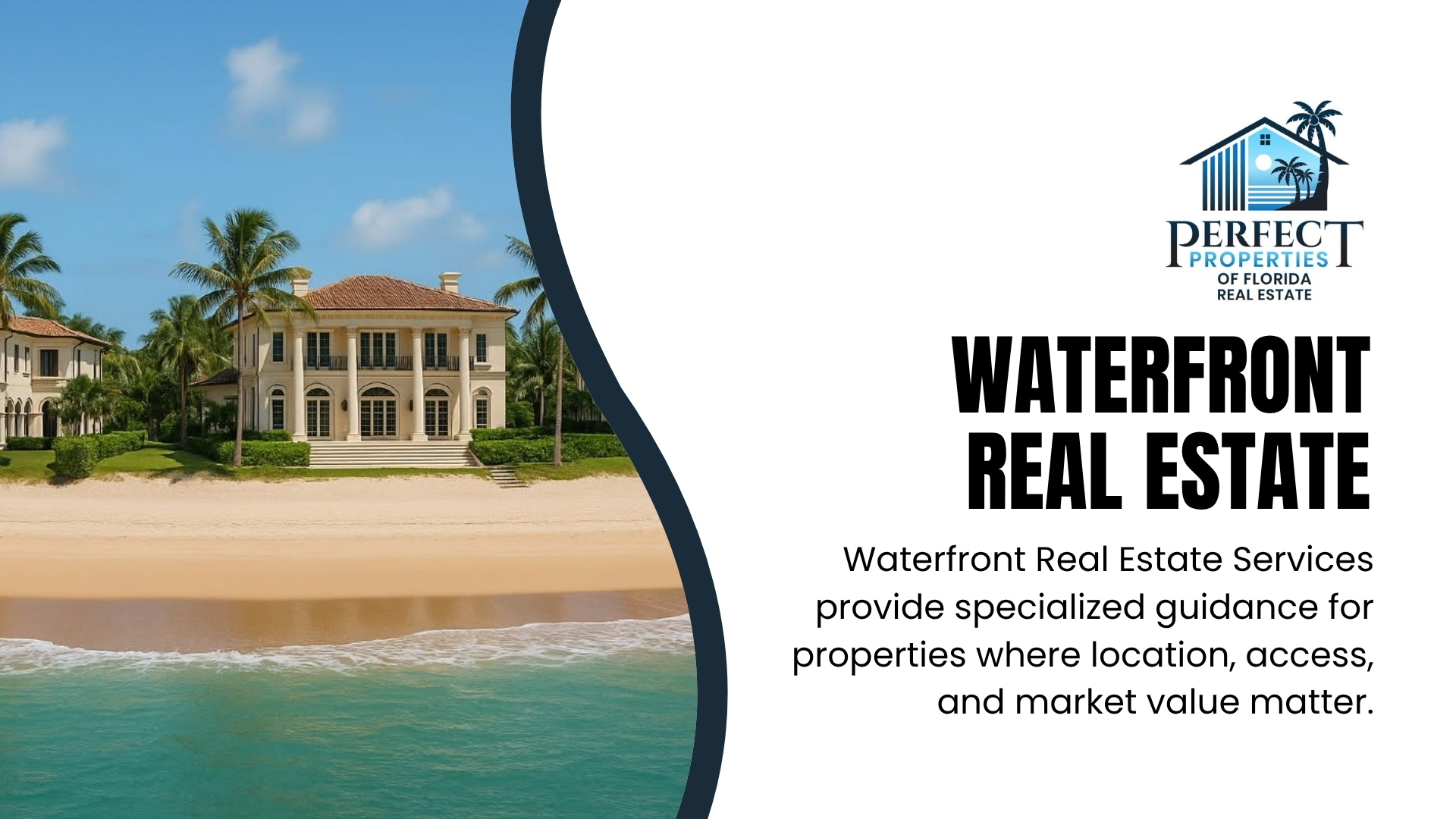
Fort Lauderdale earns its “Venice of America” nickname honestly. With more than 165 miles of navigable waterways threading through nearly every corner of the city, waterfront real estate services in Fort Lauderdale isn’t a niche market here; it’s a defining part of how people live. For anyone searching for a canal-front bungalow, an Intracoastal condo, or a deep-water estate with a private dock, the sheer variety of options can feel overwhelming without the right guidance.
At Perfect Properties of Florida, we’ve spent years walking clients through docks, seawalls, and closing tables across this city’s waterfront neighborhoods. What we’ve learned, again and again, is that the difference between a smart purchase and a regrettable one almost always comes down to understanding what you’re actually buying. A home “near the water” is not the same as a true waterfront property, and the fine print around dock rights, seawall condition, and flood zones can make or break a deal.
This guide walks through what waterfront property really means, where to search for it, how to evaluate a listing before you fall in love with it, and what the buying process looks like from first showing to closing day.
What Does Waterfront Mean in Real Estate?
In real estate terms, a waterfront property is a parcel of land that directly borders a body of water, such as a canal, river, lake, bay, or the ocean, with no other lot, road, or public land separating the property line from the water’s edge. This is different from a “water view” home, which may look out at a canal or the Intracoastal from a distance but doesn’t actually touch it.
The distinction matters more than most buyers expect. A true waterfront lot typically includes some form of water access, whether that’s a private dock, a seawall, or deeded rights to build one. A water-view property offers scenery but usually no direct access, no dock potential, and none of the boating lifestyle that draws so many buyers to South Florida in the first place. If being able to walk out your back door and step onto a boat matters to you, always confirm the property is waterfront and not simply water-adjacent.
What Counts as a Waterfront Property? What Defines It?
Not every home that touches water is created equal, and this is where a lot of buyers get tripped up. A handful of factors define what actually counts as waterfront property in Fort Lauderdale:
- Direct water frontage. The lot line extends to the water, usually to the mean high water mark, rather than stopping short at a buffer strip or easement.
- Seawall or bulkhead ownership. Most canal and Intracoastal homes here have a seawall, and knowing whether the homeowner or the city is responsible for its upkeep is critical before you buy.
- Riparian rights. These are the legal rights tied to waterfront ownership, including the right to build a dock, moor a boat, and access the water directly from your property.
- Navigability and depth. Not all waterfront is created equal for boaters. A shallow finger canal is very different from a deep, no-fixed-bridge canal that can accommodate a large yacht.
- Fixed versus no-fixed bridges. Properties on canals with no fixed bridges between the home and the ocean command a premium because larger vessels can pass freely.
Understanding these details before you make an offer will save you from surprises during inspection, and it’s one of the reasons working with an agent who specializes in this market pays off.
Types of Waterfront Properties in Fort Lauderdale
Fort Lauderdale’s waterfront inventory is more diverse than most people realize. Here’s a breakdown of the main categories buyers typically look for.
Canal-Front Homes
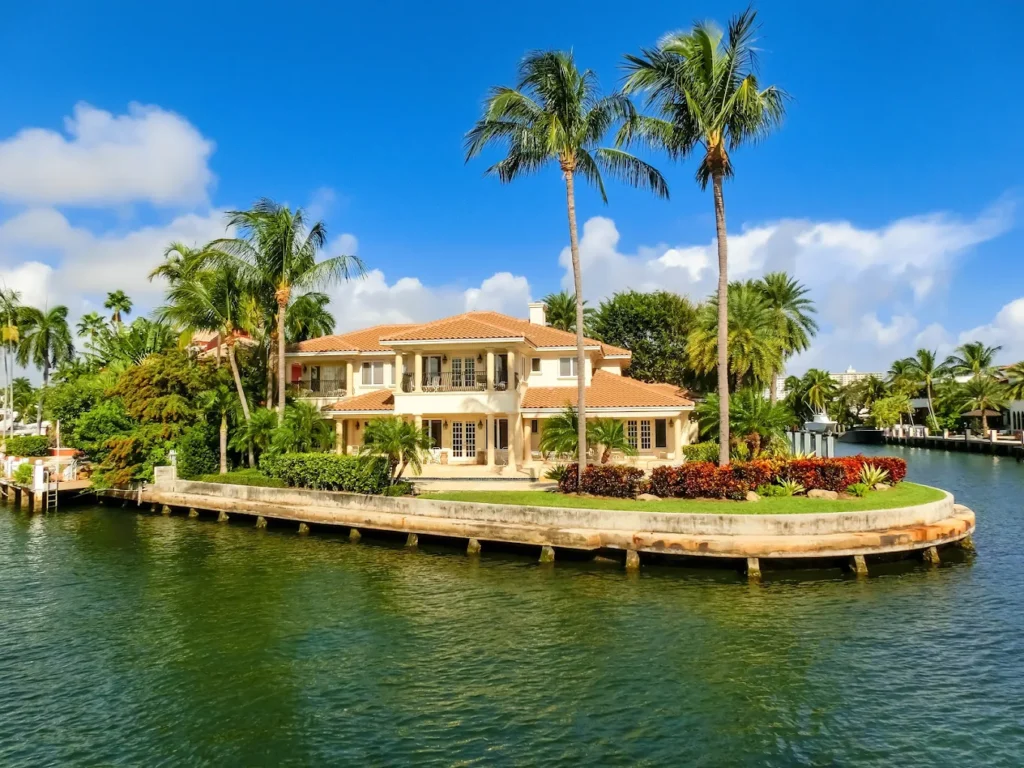
These are the classic Fort Lauderdale waterfront homes, single-family properties on residential canals with a private dock in the backyard. Neighborhoods like Rio Vista, Coral Ridge, and the Las Olas Isles are full of these, ranging from modest 1950s ranch homes to fully rebuilt modern estates.
Intracoastal Waterway Properties
Homes and condos directly on the Intracoastal Waterway offer wide, open water views and often larger dock capacity, since the Intracoastal itself is deep and well-traveled. These properties tend to carry a premium over interior canal homes because of the view and the ease of access to the ocean.
Ocean-Direct and Beachfront Real Estate
True oceanfront property, where the lot borders the Atlantic directly, is rarer and concentrated in areas like Galt Ocean Mile and parts of Harbor Beach. These are typically high-rise condos rather than single-family homes, given how limited direct beachfront land is.
No-Fixed-Bridge Deep Water Access
For serious boaters, “no fixed bridge” is the phrase to search for. These properties sit on canals that connect to the ocean without any low bridges in the way, meaning yachts and sailboats with tall masts can come and go freely. This category commands some of the highest prices in the market because the supply is genuinely limited.
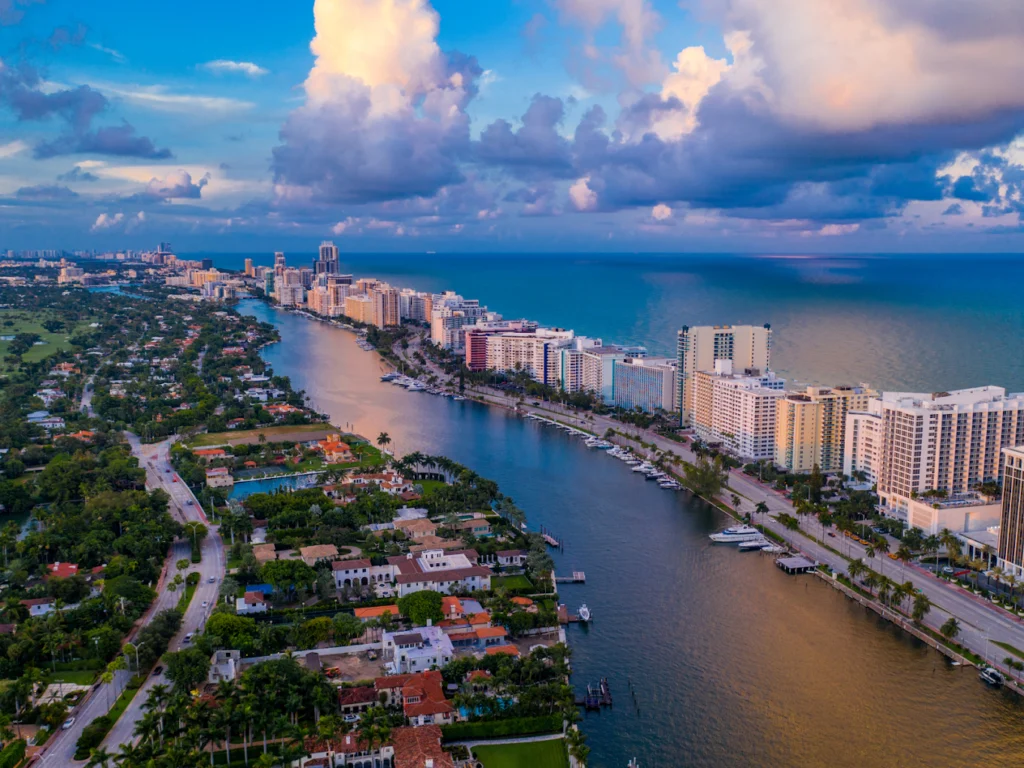
Why Fort Lauderdale Is One of Florida’s Top Waterfront Markets
Fort Lauderdale didn’t earn its reputation as a boating capital by accident. The city’s canal system was largely carved out in the mid-20th century specifically to create waterfront residential lots, which is part of why the inventory here is so much deeper than in many other Florida cities. Add in a natural deep-water port, a world-class marine industry, and a climate that supports boating nearly year-round, and it’s easy to see why buyers from across the country and abroad target this market specifically.
Beyond the boating culture, the lifestyle draw is real. Waterfront living here often means outdoor entertaining space, private docks that double as income potential through boat rentals or storage, and a level of privacy that’s hard to find in a dense, sunny metro area. Proximity to Fort Lauderdale-Hollywood International Airport and the city’s growing downtown also make it practical for buyers who split time between Florida and another home base.
Is Buying Waterfront Property a Good Investment?
This is one of the most common questions we hear, and the honest answer is that waterfront property has historically outperformed comparable inland real estate in Fort Lauderdale, but it comes with trade-offs worth weighing carefully.
On the upside, waterfront lots are inherently limited. The city isn’t creating new canals, which means supply stays fixed while demand from buyers relocating to Florida continues to grow. Homes with true water access and dock rights also tend to hold value better during market slowdowns, since that combination of features can’t be replicated on an inland lot.
On the other side of the ledger, waterfront ownership comes with real carrying costs. Flood insurance is mandatory in most cases and can run significantly higher than a comparable inland home. Seawalls need periodic repair or replacement, which can run into the tens of thousands of dollars. And insurance underwriting for coastal Florida property has tightened in recent years, so buyers need to budget for that reality rather than being caught off guard at closing.
Taken together, waterfront property is generally a strong long-term investment for buyers who go in with realistic expectations about maintenance and insurance costs, rather than viewing it purely as scenery.
How to Find Waterfront Property in Fort Lauderdale
How to Find Waterfront Property for Sale
The most reliable way to find waterfront property for sale is to search the MLS with filters specifically set for waterfront frontage, dock availability, and bridge clearance, rather than relying on general listing sites that often lump water-view and true waterfront homes together. A local agent who specializes in this segment will also have relationships that surface off-market and pre-market waterfront listings before they hit public search portals, which matters in a market where good inventory moves quickly.
Where to Find Affordable Waterfront Real Estate
Affordable waterfront real estate in Fort Lauderdale does exist; it just requires knowing where to look. Interior finger canals in neighborhoods slightly outside the most prestigious pockets, smaller older homes on deep lots that are candidates for renovation, and townhome or condo communities with shared dock access tend to offer meaningfully lower entry points than the marquee no-fixed-bridge estates. Buyers willing to consider a fixer-upper on a great lot, rather than a move-in-ready home, often find the best value per linear foot of water frontage.
How to Buy Waterfront Property: A Step-by-Step Overview
Buying waterfront property follows the same basic framework as any home purchase, but with a few extra steps that matter a great deal.
- Define your priorities first. Decide whether ocean access, no fixed bridges, dock length, or a specific neighborhood matters most, since waterfront listings vary widely on these details.
- Get pre-approved with flood insurance in mind. Ask your lender to factor in estimated flood and wind insurance early, since these costs affect your true monthly payment more than they would on an inland home.
- Work with an agent who understands waterfront specifics. This isn’t the market to learn on the fly. An agent familiar with seawalls, dock permits, and riparian rights will catch issues a generalist might miss.
- Have the seawall and dock inspected separately. A standard home inspection doesn’t always cover marine structures in depth, so bring in a marine contractor or engineer if the seawall’s age or condition is unclear.
- Order a survey that confirms the property line and any easements. This protects you from disputes over dock placement or shared water access down the road.
- Review riparian rights and any HOA rules on boat size or dock use. Some communities restrict commercial vessels, liveaboards, or boat length, which matters if you already own a boat.
- Close with title insurance that accounts for waterfront-specific issues, such as mean high water line disputes, which can occasionally arise on older Fort Lauderdale properties.
Why Work With a Waterfront Realtor in Fort Lauderdale
A waterfront real estate agent brings something a general practice agent simply can’t: pattern recognition built from repeated exposure to the details that make or break these deals. At Perfect Properties of Florida, our team has guided buyers and sellers through transactions involving everything from modest canal cottages to no-fixed-bridge estates with private mega-yacht docks, and that hands-on experience shapes how we advise clients from the first showing.
We look at things a lot of buyers wouldn’t think to ask about: how old the seawall is, whether the dock has proper permits, what the actual bridge clearance is if a client owns a sailboat, and how flood zone designations might shift insurance costs down the line. That kind of on-the-ground knowledge, paired with a genuine familiarity with which streets and canals command a premium and why, is what waterfront property services should look like. It’s the difference between an agent who can open a lockbox and one who can actually protect your interests in a specialized transaction.
Popular Fort Lauderdale Waterfront Neighborhoods to Explore
Fort Lauderdale’s waterfront neighborhoods each have a distinct character, and getting familiar with them helps narrow a search considerably.
- Las Olas Isles offers some of the city’s most prestigious deep-water canal homes, many with no fixed bridges to the ocean, within walking distance of Las Olas Boulevard’s restaurants and shops.
- Rio Vista is one of the most established waterfront communities, known for tree-lined streets and a mix of classic and newly built homes on wide canals.
- Harbor Beach sits between the Intracoastal and the ocean, offering some of the largest waterfront lots in the city along with private beach access for residents.
- Coral Ridge features a large network of canals with a wide range of home sizes and price points, making it a popular entry point for first-time waterfront buyers.
- Sunrise Key and Seven Isles are gated, guard-attended communities with premium dockage and a strong sense of privacy, popular among buyers who want added security.
- Idlewyld is a smaller, quieter peninsula neighborhood with quick ocean access and a tight-knit community feel.
Insurance, Flood Zones, and Other Waterfront Ownership Considerations
Owning waterfront property in Fort Lauderdale comes with responsibilities that inland buyers rarely have to think about. Nearly every waterfront property sits within a flood zone that requires a separate flood insurance policy, and premiums vary significantly based on elevation, the age of the home, and how the property is elevated relative to base flood level. It’s worth requesting a current insurance quote before finalizing an offer, since costs can shift a deal’s overall affordability more than buyers expect.
Seawalls typically last several decades but do require maintenance, and replacement costs can be substantial depending on length and material. Buyers should always ask for the age of the seawall and any permit history for repairs. Dock permits are another item worth confirming, since unpermitted docks can complicate insurance, resale, or even future renovation plans.
Finally, many waterfront communities have specific rules through their HOA or municipal code around boat size, commercial use of docks, and even how long a vessel can be docked if it’s not actively used. None of these considerations should discourage a purchase, but going in informed means fewer surprises after closing.
Buying Waterfront Real Estate in Fort Lauderdale
Fort Lauderdale remains one of the most compelling waterfront markets in the country, offering a genuine boating lifestyle, strong long-term value, and a level of variety few other cities can match. Whether you’re drawn to a quiet interior canal home, a no-fixed-bridge estate built for a serious yacht, or an Intracoastal condo with sweeping water views, the right fit depends on details that aren’t always obvious from photos alone.
Working with a team that understands the nuances of dock rights, seawall condition, and neighborhood-by-neighborhood pricing makes the entire process smoother and helps protect what is, for most buyers, a significant investment. Perfect Properties of Florida has spent years focused specifically on this market, and we’re glad to walk you through available listings, answer questions about a specific canal or neighborhood, or simply help you understand what to look for before you start touring homes.
If you’re ready to explore waterfront homes in Fort Lauderdale or want a clearer picture of what’s currently available in your price range, reach out to Perfect Properties of Florida to start the conversation.
FAQ’s
What does waterfront mean in real estate?
A waterfront property directly borders a body of water like a canal, river, or ocean, with no lot or road between the home and the water’s edge. It’s different from a “water view” property, which overlooks water but doesn’t touch it.
What counts as a waterfront property?
It comes down to direct frontage, seawall ownership, and riparian rights (the legal right to build a dock or moor a boat). Navigability and bridge clearance also affect what type of boating access the property actually offers.
Is buying waterfront property a good investment?
Generally yes, since waterfront lots are limited and hold value well long-term. But buyers should budget for higher flood insurance and seawall maintenance costs, which are real ongoing expenses beyond the purchase price.
How do I find waterfront property for sale in Fort Lauderdale?
Search the MLS with filters for water frontage, dock access, and bridge clearance rather than general listings. A local waterfront specialist can also surface off-market listings before they’re publicly posted.
Where can I find affordable waterfront real estate?
Look at interior finger canals, older homes needing renovation, or condo communities with shared dock access. These typically offer a lower entry point than premium no-fixed-bridge estates.
How do I buy waterfront property the right way?
Get pre-approved with flood insurance factored in, work with an agent experienced in waterfront transactions, have the seawall and dock separately inspected, and confirm riparian rights and permits before closing.